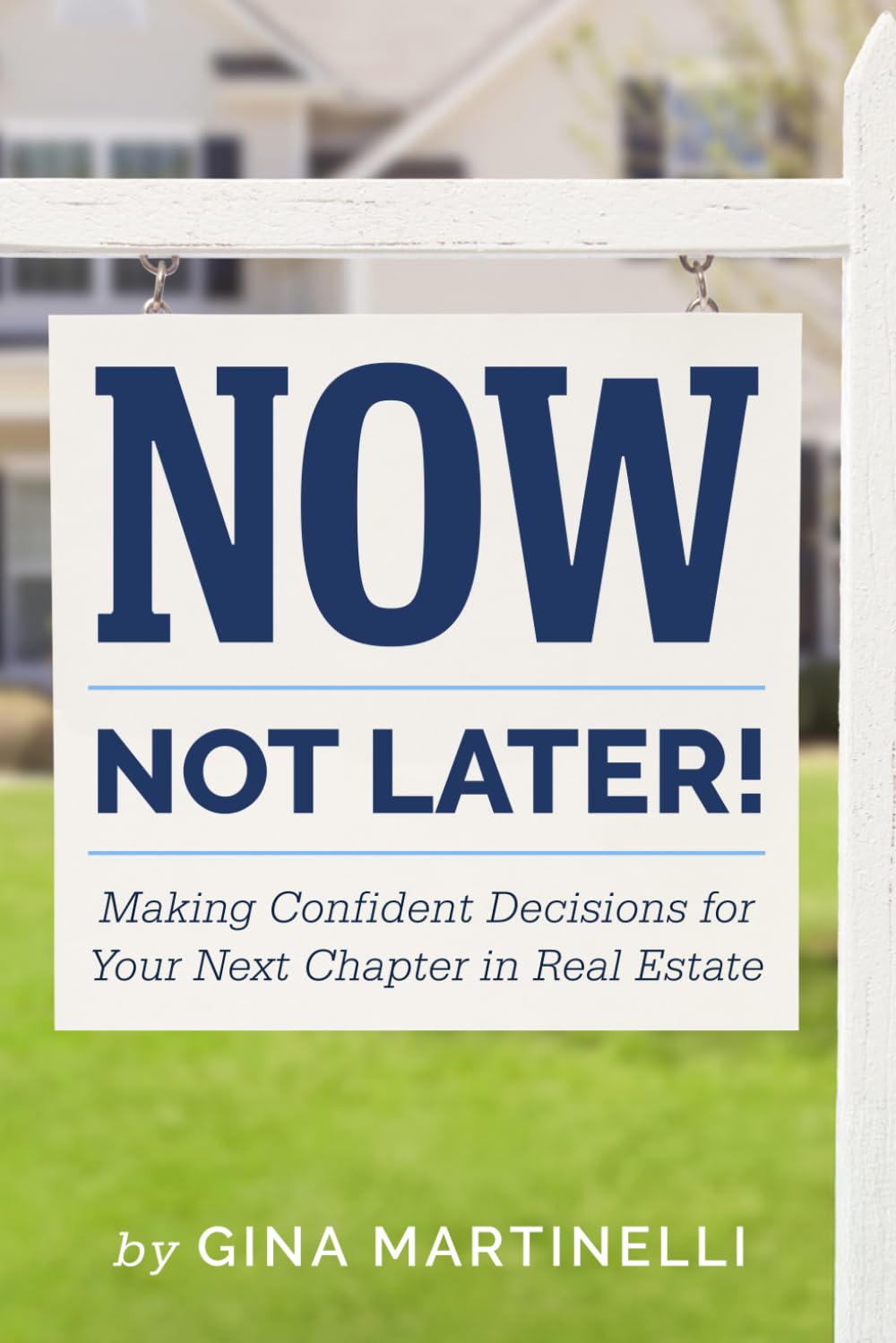

Sonoma County, California Buyer's Guide

Now, Not Later!

Making confident decisions for your next chapter in real estate. A complete guide for homeowners and renters in Sonoma County who are ready to stop waiting and start moving forward.

by GINA MARTINELLI
30+
Years of Experience
10
Complete Chapters
2
Buyer Journeys
Gina Martinelli, REALTOR® and Broker, Sonoma County
Meet the Author

A Trusted Guide Through Your Most Important Decision

CA DRE #01007201 Broker, Martinelli Real Estate Sonoma County, CA

For over three decades, Gina Martinelli has guided buyers and sellers through one of life's most consequential decisions. Built on deep roots in the Sonoma County real estate community and a refusal to settle for shortcuts, her practice focuses on clarity over pressure and explanation over salesmanship.

Explanations create clarity. Clarity creates confidence. Confidence creates the outcomes you most want.

Gina wrote this book for two kinds of buyers. The first is the established homeowner weighing whether the home that served a previous chapter still serves the one being lived now. The second is the long-time renter who is ready to stop building someone else's wealth and start building their own.

Whichever group you belong to, the goal of this guide is the same: to give you the language, the math, and the framework you need to make the next decision with confidence.

  • Buyer representation across Sonoma County
  • First-time buyer specialist
  • Move-up and downsizing strategy
  • Equity-deployment guidance
  • Local market expertise since the 1990s
  • Trusted lender and inspector network
Inside the Book

Two Guides, One Goal: Your Next Chapter

Now, Not Later! is structured as two complete buyer's guides under one cover. Whether you already own a home or you have spent years renting, the framework helps you read your own situation honestly and act on it.

I

Beyond the Numbers

A Guide to Life-Centered Real Estate Decisions

Written for current homeowners considering their next move. The first half of the book reframes interest rates, square footage, and proximity, and helps you decide whether the home you have is still the home you need.

  • 1. The True Cost of Space
  • 2. The Mathematics of What Matters
  • 3. The Geography of Connection
  • 4. Timing Life, Not Markets
  • 5. Writing Your Next Chapter
II

Breaking Free

A Renter's Guide to Homeownership

Written for renters who are ready to stop building someone else's wealth. The second half walks through the rent trap, the perfect timing myth, and a stage-by-stage plan for becoming a confident first-time buyer.

  • 1. The Rent Trap
  • 2. The Perfect Timing Myth
  • 3. The Inflation Squeeze
  • 4. The Life You're Not Living
  • 5. Breaking Free

Read the Chapters

Both guides are below. Choose the path that matches your situation. Click any chapter to open it.

For homeowners with equity who are weighing whether the home that served a previous chapter still serves the one being lived now.

When Homes Become Burdens

Your home should serve your life, not consume it. Yet many homeowners find themselves trapped in a subtle reversal, spending their prime years managing properties that no longer match how they actually live. The space that once felt like a sanctuary gradually transforms into a burden, demanding time, energy, and resources that could be invested in relationships, experiences, and personal fulfillment.

The transformation happens slowly, almost imperceptibly. Children move away for college, careers, and families of their own, leaving bedrooms that become repositories for holiday decorations and exercise equipment that seemed essential when purchased. Formal dining rooms that once hosted weekly family dinners now serve as glorified mail-sorting stations. Living areas designed for entertaining house only the evening news and weekend projects. Yards that echoed with children's laughter become weekly obligations, demanding mowing, raking, and maintenance that feels more like duty than joy.

Without conscious recognition, many homeowners become curators of spaces they don't truly inhabit. They heat and cool rooms they rarely enter, ensure square footage they seldom use, and maintain systems that serve empty spaces. The result is a gradual misalignment between the home's capacity and the owner's actual lifestyle, a gap that grows wider and more expensive with each passing year.

The Financial Reality of Excess Space

The financial burden extends far beyond the mortgage payment. Large homes demand proportionally higher costs across every category of ownership. Heating and cooling systems work harder to maintain comfortable temperatures in unused bedrooms and formal spaces. Every additional 1,000 square feet can add $2,000 to $4,000 annually in utility costs, depending on climate and energy efficiency. Property taxes and insurance premiums scale with home size and replacement value. Cleaning services charge by square footage. Even seemingly fixed costs like internet and cable often increase with the number of rooms requiring coverage.

Maintenance and repair costs follow a similar trajectory. Larger homes have more windows to replace, more roof area to repair, more flooring to refinish, and more mechanical systems to service. The 1 to 3 percent annual maintenance rule, often cited as a rough guideline for homeownership costs, can translate to $5,000 to $15,000 yearly for a $500,000 property. But for homes approaching or exceeding twenty years of age, these costs often escalate as multiple systems reach end-of-life simultaneously.

The compounding effect is significant. Over a ten-year period, the cost differential between maintaining 3,500 square feet versus 2,000 square feet of similar quality can easily reach $80,000 to $150,000. This calculation includes higher utilities, increased maintenance, elevated insurance premiums, and greater property tax assessments. For many homeowners, this represents a substantial portion of their discretionary retirement income, money that could fund travel, experiences, family assistance, or financial security.

The Hidden Drain on Time and Energy

Beyond pure financial calculations lies a more subtle but equally important cost: the depletion of personal energy and time. Large homes create what researchers call cognitive load, the mental effort required to make decisions, manage systems, and coordinate maintenance. Every additional room represents potential projects, seasonal preparations, and ongoing upkeep decisions. The larger the home, the longer the mental to-do list, and the more your attention gets fragmented across property management tasks.

Consider the hidden time investments that large homes require. Scheduling and coordinating with contractors for routine maintenance. Researching and purchasing replacement items for multiple bathrooms, bedrooms, and living areas. Managing seasonal transitions that affect different zones of the house. Cleaning or supervising the cleaning of spaces you rarely use. These tasks individually seem minor, but collectively they can consume hours each week, time that could be invested in health, relationships, hobbies, or community involvement.

The physical demands of large home ownership become more apparent with age. Stairs that felt neutral in your fifties can become daily challenges in your seventies. Multiple levels mean multiple areas to secure, monitor, and maintain. Yard work that once provided satisfying exercise can transform into a dangerous obligation as balance and endurance decline. Many homeowners find themselves gradually avoiding portions of their own homes, essentially paying to maintain spaces they've begun to fear or find inaccessible.

The Emotional Weight of Empty Space

The emotional toll often proves most surprising to homeowners. Empty bedrooms can trigger memories and melancholy rather than serving any practical purpose. Unused formal spaces can feel like monuments to a life stage that has passed, creating subtle but persistent reminders of what once was rather than supporting what is. Some homeowners describe feeling like caretakers of their own memories, trapped by sentiment in spaces that no longer spark joy or serve their current needs.

This doesn't mean that staying in a larger home is always wrong. There are legitimate reasons to maintain extra space: regular hosting of family gatherings that genuinely utilize the square footage, multi-generational living arrangements, home-based businesses or serious hobbies that require dedicated space, or simply abundant financial resources that make the cost differential irrelevant. The key is honest assessment. Are you maintaining space for active, purposeful use, or out of habit and attachment to past chapters of your life?

Alternative Solutions to Moving

The path forward isn't necessarily about moving to a smaller home, though that's often the most straightforward solution. Some homeowners successfully reconfigure their current properties for more efficient living, converting upper levels to rental units or redesigning layouts to concentrate daily activities on a single floor. Others outsource the maintenance tasks that have become burdensome, hiring services for yard work, cleaning, and routine upkeep to eliminate the time and energy drain without changing location.

Technology can also reduce the burden of larger homes. Smart thermostats can zone heating and cooling to occupied areas. Security systems with cameras and sensors can monitor unused spaces without requiring physical checks. Automated irrigation and lighting systems can maintain landscapes and exteriors with minimal human intervention. While these solutions require upfront investment, they can significantly reduce the ongoing cognitive and physical load of large home ownership.

Making Informed Space Decisions

The most successful space optimization begins with honest usage assessment. Track which rooms you actually occupy over a typical month. Note which maintenance tasks consistently drain your energy or enthusiasm. Calculate the true financial cost of space you don't actively use. This data provides the foundation for informed decision-making about whether to modify, maintain, or move from your current situation.

The goal isn't to judge the choices you made in previous life stages. The large home may have been perfect when children filled bedrooms and social calendars demanded entertaining space. The goal is alignment between your current reality and your living environment. When that alignment exists, your home becomes a platform for the life you want to live. When it doesn't, your home becomes a barrier to that life, consuming resources that could be better invested in experiences, relationships, and personal fulfillment.

The true cost of space isn't measured only in dollars, though the financial impact is substantial. It's measured in the opportunity cost of time and energy diverted from what matters most to you now. The space you choose to maintain should actively contribute to your current priorities, not simply exist as a monument to previous chapters of your story.

Reflection Questions
  1. Which rooms in my home carry energy but no life, and what is it costing me emotionally, financially, and spiritually to maintain them?
  2. How would my daily rhythm expand if I released the burden of unused space and chose only what actively nourishes me now?
  3. What memories am I holding onto through square footage that could be released in order to create space for who I am becoming?

The Rate Obsession Trap

The headlines scream about interest rates. Dinner conversations revolve around market predictions. Financial news cycles through endless speculation about when rates might drop, when markets might cool, and when the perfect moment to buy or sell might arrive. Yet the most important calculation in real estate has nothing to do with percentages or projections. It's the equation between the life you're living and the life you want.

When homeowners tell me they're waiting for rates to drop from six percent back to three, I understand the impulse. Numbers feel concrete in an uncertain world. A mortgage rate is quantifiable, trackable, something you can point to and say, this is why we're waiting. But this laser focus on interest rates often obscures a more fundamental truth: for established homeowners with substantial equity, the traditional affordability equation has changed entirely.

The Equity Advantage

Consider a homeowner who purchased their home twenty-five years ago for $150,000. Today, that same property might be worth $500,000, with only $50,000 remaining on the mortgage. The equity they've built, through monthly payments, appreciation, and the simple passage of time, totals $450,000. This isn't just a number on a statement. It's accumulated wealth that fundamentally changes their financial options.

If this homeowner decides to purchase a $500,000 property, they're not starting from zero like a first-time buyer. They can roll their $450,000 in equity forward, borrowing only $50,000 for their new home. At today's six percent interest rate, that monthly payment would be approximately $300. Compare this to a first-time buyer who needs to finance $400,000 of that same property at six percent. Their payment jumps to $2,398 monthly. The difference is staggering, and it illustrates why obsessing over interest rates can be misleading for equity-rich homeowners.

This mathematical reality extends beyond monthly payments. When you have substantial equity, you're essentially insulated from much of the rate sensitivity that dominates media coverage. The portion of your purchase that requires financing may be so small that even significant rate changes have minimal impact on your monthly obligations. A two-point swing in rates might affect your payment by $50 or $100 monthly. Meaningful, but not necessarily life-altering when weighed against other factors.

The Hidden Costs of Waiting

Yet many homeowners remain anchored to rate comparisons, often missing the broader financial picture. While they wait for rates to improve, they continue paying the full cost of their current home ownership. For a $500,000 property, annual carrying costs typically include property taxes of $10,000 to $15,000, insurance premiums of $2,000 to $4,000, maintenance and repairs averaging 1 to 3 percent of the home's value, and utilities ranging from $3,000 to $5,000. These expenses total $20,000 to $30,000 annually, regardless of your mortgage rate.

Over two years of waiting for better market conditions, these carrying costs alone could reach $40,000 to $60,000. For rates to justify this delay, you'd need them to drop enough to save you more than what you're spending to stand still. Given typical loan amounts for equity-rich homeowners, this break-even scenario often requires rate decreases that may never materialize.

Breaking Free from Rate Fixation

The psychological trap of rate fixation runs deeper than mathematics. Homeowners often treat their low-rate mortgage like a trophy, a symbol of smart financial timing. This emotional attachment can prevent clear thinking about whether the home itself still serves their needs. A three percent mortgage rate only benefits you if the house it's attached to supports the life you want to live. If you're maintaining more space than you need, living far from family and friends, or spending weekends on projects you no longer enjoy, that great rate might be costing you more than a higher rate on a home that truly fits.

The market timing mentality assumes you can predict future rate movements with reasonable accuracy. History suggests otherwise. Even professional economists and Federal Reserve officials regularly miss the mark on rate forecasts. Economic conditions, geopolitical events, and policy changes create complexity that defies precise prediction. Basing major life decisions on interest rate speculation is essentially gambling with your remaining years.

There's also the opportunity cost of delay to consider. Every month you postpone a move that would improve your quality of life is a month you cannot reclaim. If relocating would place you closer to grandchildren, reduce your maintenance burden, or position you near healthcare and community resources you'll increasingly need, waiting for marginal rate improvements trades real lifestyle benefits for hypothetical financial gains.

Modern Financial Flexibility

The refinancing safety net provides another angle worth considering. Unlike previous generations who were often locked into their original mortgage terms, today's homeowners retain the option to refinance if rates fall significantly. This flexibility means you don't need to wait for perfect conditions before making a move. You can act based on your current life needs and adjust your financing later if market conditions improve.

Smart financial planning starts with understanding what actually drives your costs and benefits. For established homeowners, this analysis should include total housing expenses, not just mortgage payments. It should weigh the value of time against the uncertainty of market timing. It should consider your stage of life, health trajectory, and relationship priorities alongside pure financial metrics.

Redefining Value Beyond Numbers

The most successful homeowners I work with approach these decisions with what I call financial pragmatism. They respect the importance of sound money management while recognizing that personal fulfillment and family connection have value that doesn't appear on spreadsheets. They use their equity strategically, not to chase perfect market timing, but to align their housing with their actual priorities.

This doesn't mean ignoring financial prudence. It means expanding your definition of value beyond interest rates and monthly payments. When you factor in the cost of time, the value of proximity to loved ones, and the benefit of reduced stress and maintenance, the expensive move often proves to be the wise investment.

The mathematics of what matters extends far beyond mortgage calculations. It includes the compound interest of family relationships, the appreciation of personal freedom, and the depreciation of unused time. These variables don't appear in rate charts or market forecasts, but they determine whether your housing decisions create wealth in the truest sense, a life well-lived.

Reflection Questions
  1. What would shift in my life if I stopped measuring decisions by percentages and started measuring them by the life I most want to live?
  2. How has my attachment to a good rate blinded me from seeing the equity, freedom, and possibility I already hold in my hands?
  3. What is the true cost of waiting? What relationships, experiences, or peace am I trading for the illusion of a better number?

The Growing Weight of Distance

Where you live shapes who you see, what you do, and how engaged you remain with the world around you. Distance, while seemingly manageable today, has a peculiar way of growing heavier with time. What feels like a reasonable drive in your sixties can become prohibitive in your seventies, transforming manageable geography into insurmountable barriers between you and the people and activities that give your life meaning.

The mathematics of proximity is often underestimated. A twenty-minute drive to visit grandchildren becomes forty minutes round-trip, plus preparation time, plus the energy required for the journey itself. As these small increments accumulate, what once felt spontaneous becomes planned, what felt easy becomes effortful, and what felt natural becomes increasingly rare. The subtle erosion of connection happens gradually, often without conscious recognition, until one day you realize weeks have passed since you've seen the people who matter most.

Research consistently demonstrates that social isolation accelerates cognitive decline, increases depression risk, and contributes to earlier mortality. Yet many homeowners inadvertently choose isolation by prioritizing property features over proximity to their support networks. They select homes based on square footage, architectural style, or financial considerations while giving minimal weight to distance from family, friends, healthcare, and community resources. This prioritization made sense during career-building years when work location often dictated housing choices, but it requires reconsideration as life circumstances evolve.

Family Connections and Life's Timeline

The family connection represents perhaps the most emotionally significant aspect of geographic decision-making. Grandchildren don't pause their development waiting for ideal visiting conditions. School plays, sports events, birthday parties, and ordinary Tuesday afternoons happen on their timeline, not yours. The grandparent who lives an hour away might attend major events but misses the casual moments that often prove most precious, the impromptu dinner invitation, the after-school pickup, the sick day when extra help is needed.

I've observed countless families where geographic distance gradually shifts relationships from active participation to periodic visitation. Grandparents become guests in their grandchildren's lives rather than integral participants. Parents feel guilty about the infrequency of visits but struggle with the logistics of regular travel. Children grow accustomed to communicating with distant grandparents through screens rather than embracing them in person. Everyone adapts, but something essential is lost in the translation.

The friendship network faces similar challenges. Lifelong friends who once gathered weekly for dinners, activities, or simply companionship find themselves scheduling visits like business meetings. Spontaneous connection, the impromptu coffee invitation, the last-minute dinner suggestion, the I was in the neighborhood visit, disappears when neighborhoods are separated by significant travel time. Social calendars become more formal and less frequent, gradually reducing the web of relationships that contribute to emotional well-being and practical support.

Healthcare and Community Access

Healthcare proximity becomes increasingly critical as medical needs evolve. The specialists you trust, the hospital where your doctors practice, the physical therapy clinic that knows your history. These relationships and resources become more valuable with age. Living far from established healthcare providers often means starting over with new practitioners who lack your medical history and personal understanding. Emergency situations become more complicated when trusted care is distant. Routine appointments require longer travel, making them more burdensome and potentially leading to delayed or skipped care.

Community involvement, whether through religious organizations, volunteer work, hobby groups, or civic participation, also suffers from distance. The retiree who dreams of mentoring young professionals but lives far from business districts finds fewer opportunities. The lifelong volunteer whose heart belongs to a particular organization gradually reduces involvement when every commitment requires significant travel. The community member whose voice contributed to local decisions finds participation waning when meetings and events feel geographically inconvenient.

The window for meaningful connection operates on a timeline that doesn't accommodate indefinite delay. Children grow up faster than anticipated. Friends relocate, develop health issues, or pass away. Community organizations evolve or dissolve. Health changes can make travel more difficult or impossible. The years spent living at a distance from your priorities are years of connection and contribution you cannot recover.

Strategic Proximity Planning

Yet proximity isn't simply about minimizing distance. It's about creating sustainable patterns of engagement. The goal isn't to live next door to everyone you care about, but to position yourself within a reasonable radius of your most important relationships and activities. This might mean choosing a location that places you within thirty minutes of your children's families, fifteen minutes from your primary care physician, and walking distance from at least one community organization that reflects your values or interests.

Geographic strategy should also consider transportation realities. Today's easy drive becomes tomorrow's challenging journey as night vision declines, reflexes slow, or confidence in heavy traffic diminishes. The route that feels comfortable now might prove intimidating in five years. Weather conditions that currently represent minor inconvenience could become significant barriers. Planning for these changes while you still have full mobility creates options rather than limitations.

Technology's Role and Limitations

Technology offers partial solutions but cannot replace physical presence. Video calls can maintain some connection with distant family members, online communities can provide social interaction, and telemedicine can handle certain healthcare needs. However, these digital alternatives lack the full richness of in-person relationships. They can supplement proximity but cannot substitute for it entirely. The grandmother who watches her grandchild's school play via livestream experiences the event but misses the pre-show excitement, the intermission conversations, and the post-performance celebration.

The housing market often presents trade-offs between proximity and other desirable features. The perfect home in terms of size, style, and amenities might be located far from your priority network. The community that offers ideal proximity might have limited housing options that match your preferences. These decisions require weighing the relative importance of physical features versus geographic advantages, often concluding that proximity provides longer-term value than additional square footage or architectural details.

The Investment Value of Connection

Financial considerations intersect with proximity in complex ways. Living closer to urban centers or established communities often commands premium pricing, but this cost should be evaluated against transportation savings, healthcare convenience, and the intangible value of sustained relationships. The less expensive home that requires an hour's drive to reach family and services might prove more costly when you factor in travel time, vehicle expenses, and the opportunity cost of reduced connection.

The geography of connection ultimately reflects your values and priorities. If family relationships rank high in your hierarchy of importance, living near family members deserves serious consideration. If community involvement provides meaning and purpose, proximity to organizations and activities that align with your interests merits weight in your decision-making. If healthcare quality and convenience matter to your peace of mind, distance from trusted providers should factor into your calculations.

The most successful housing decisions create geography that supports rather than hinders your vision for your remaining years. This might mean trading space for proximity, architectural charm for convenience, or familiar surroundings for strategic location. The goal is alignment between where you live and how you want to live, recognizing that connection and community often prove more valuable than square footage and storage space.

Reflection Questions
  1. Who in my life am I quietly losing to the simple weight of distance, and what would change if I lived closer to them?
  2. Which connections, traditions, and small daily moments am I willing to keep sacrificing for the home I have today?
  3. If proximity is a form of love, what does my current address say about the priorities I am living by?

Two Different Clocks

There are two clocks governing your housing decisions: the market clock and your life clock. While watching market conditions is reasonable, your energy, health, and relationships operate on a different timeline, one that doesn't pause for perfect conditions. The pursuit of optimal market timing often becomes sophisticated procrastination. Even experts regularly miss predictions about rate movements and market timing. The data reveals a sobering truth: most people who try timing markets end up worse off than those making decisions based on personal circumstances. Meanwhile, life moves forward regardless of interest rates.

Why Market Timing Rarely Works

Professional economists, Federal Reserve officials, and market analysts, armed with sophisticated models, extensive data, and full-time research capabilities, regularly miss the mark on predictions about rate movements, price trends, and market timing. If experts with every possible advantage cannot reliably forecast market conditions, individual homeowners have even less chance of successfully timing their moves to coincide with optimal financial windows.

The data on market timing reveals a sobering truth: most people who try to time real estate markets end up worse off than those who make decisions based on personal circumstances and life needs. The homeowner who waits for rates to drop from 6 percent to 4 percent might wait years while continuing to pay carrying costs on a property that no longer serves their needs. Even if rates eventually decline, the money spent maintaining the wrong home during the waiting period often exceeds any savings achieved through better financing terms.

The Life Clock

Energy and capability follow predictable trajectories that don't correlate with market cycles. The physical and emotional stamina required to research new communities, pack decades of belongings, coordinate moves, and establish new routines typically peaks in your sixties and early seventies. Waiting until your late seventies or eighties to make these transitions often means attempting complex changes when you have less capacity to manage them effectively.

Health changes also don't schedule themselves around optimal market conditions. The active lifestyle that supports easy moves can shift quickly with unexpected health issues. The cognitive sharpness that helps navigate complex decisions can decline gradually but persistently. The energy reserves that fuel major transitions can deplete unexpectedly. Making strategic moves while you have full capability ensures you have agency in shaping your circumstances rather than being shaped by them.

Life-Centered Decision Making

The most successful housing transitions happen when homeowners align their moves with their life circumstances rather than external market conditions. This approach recognizes that the perfect financial moment may never arrive, while the optimal life moment is happening now. It prioritizes personal well-being, family connection, and lifestyle alignment over hypothetical market gains.

This doesn't mean ignoring financial considerations entirely. Responsible planning includes understanding current market conditions, evaluating your financial position, and making informed decisions about timing and pricing. However, it means recognizing that life factors often outweigh market factors in determining the right time to move. The goal is financial prudence in service of life satisfaction, not life satisfaction deferred indefinitely in pursuit of financial optimization.

The concept of good enough timing proves more practical than perfect timing. If your financial position is stable, your target market is reasonable, and your life circumstances favor change, current conditions may be good enough to proceed. Waiting for theoretically better conditions often means missing practically workable conditions that exist today.

Balancing Risks and Reality

Risk assessment should include both financial and personal factors. While waiting might reduce some financial risks, it often increases personal risks: declining health, reduced capability, limited time with family, or missed opportunities for community involvement. The homeowner who postpones moving to be closer to family might save money on interest but lose irreplaceable years of relationship building with grandchildren.

Market cycles provide useful context but shouldn't dictate personal decision-making timelines. Real estate markets typically operate in longer cycles than most people anticipate. Interest rates might remain elevated for years rather than months. Price corrections, when they occur, often prove smaller and shorter-lived than buyers hope. Inventory improvements might happen gradually rather than dramatically. Basing major life decisions on assumptions about market timing often leads to years of delay for minimal or nonexistent gains.

The refinancing option provides important flexibility that previous generations of homeowners didn't enjoy. Unlike the past, when mortgage terms were largely fixed for the life of the loan, today's homeowners can adjust their financing if market conditions improve significantly. This safety net means you don't need to wait for perfect conditions before making a move. You can act based on current life needs and modify your financing later if opportunities arise.

Personal Readiness Over Market Perfection

Successful timing strategies focus on personal readiness rather than market perfection. They ask questions like: Do we have the energy to manage a transition? Are our life circumstances stable enough to handle change? Do we have clarity about what we want in our next chapter? These factors matter more than whether rates might drop six months from now or whether prices might soften next year.

The most important timing consideration is often your life clock rather than the market clock. When your current home no longer supports the life you want, when distance keeps you from people you love, when maintenance demands exceed your interest in managing them, when health or energy concerns suggest simplification, these signals matter more than any economic indicator.

Your life clock is more reliable than any market forecast because it's based on realities you can observe and control rather than predictions about complex systems that nobody fully understands. When you honor your life timing while being reasonably informed about market conditions, you make decisions that serve both your financial security and your personal fulfillment.

The goal isn't perfect timing. It's purposeful timing that aligns your housing situation with your life priorities while you still have the capability and energy to create the changes you want. This approach leads to decisions you can feel confident about, regardless of how markets evolve, because they're based on serving your life rather than speculating about economic trends.

Reflection Questions
  1. Where in my life am I hiding behind the excuse of better timing instead of honoring the truth of my life's clock?
  2. How would my decision-making change if I trusted that my energy, health, and relationships matter more than market predictions?
  3. What opportunities have I already lost by waiting, and what opportunities could I reclaim if I acted now?

Home as Life's Stage

At its heart, a home is not an investment thesis, a collection of systems to maintain, or a repository for memories of past chapters. It's the stage where your life unfolds, the environment that either amplifies or constrains your daily experiences, and the foundation from which you build your remaining years. The decision to stay or move ultimately comes down to this fundamental question: where do you want to write your next chapter?

Every life contains multiple chapters, each requiring different settings to reach its full potential. The chapter of raising children benefits from space, good schools, and room for growth. The career-building chapter might prioritize location, commute convenience, and entertaining space for professional networking. The early retirement chapter often calls for different priorities entirely: proximity to family, simplified maintenance, access to healthcare, and alignment with your evolved interests and capabilities.

The trap many homeowners encounter is attempting to write their current chapter in the setting designed for a previous one. They cling to family homes after families have grown and scattered, maintaining large properties when their interests have shifted toward travel and experiences, staying in locations that served working years but isolate them in retirement. This misalignment between life stage and living environment creates friction that touches every aspect of daily experience.

Deploying Your Equity Strategically

Your home should amplify your life, not constrain it. When the setting matches the story you're trying to tell, daily routines flow smoothly, relationships flourish, and new opportunities feel accessible rather than burdensome. When the setting works against your current priorities, simple tasks become complicated, connections require more effort, and possibilities feel limited by logistics and maintenance obligations.

The equity you've built over decades represents more than numbers on financial statements. It's stored potential, accumulated freedom that can be deployed strategically to support your vision for your remaining years. This resource can purchase proximity to grandchildren, freedom from yard work responsibilities, peace of mind that comes from simplified living, or financial flexibility to support experiences you've deferred during busier life stages.

Some homeowners discover that their next chapter requires less space but more convenience. They trade square footage for single-level living, exchange large yards for professionally maintained landscapes, and substitute formal rooms they rarely use for open concepts that facilitate daily living. The goal isn't downsizing for its own sake. It's right-sizing to match current realities and future projections.

Geographic Considerations for New Chapters

Others find that their next chapter demands a different geography entirely. The career that kept them in a particular region for decades may no longer anchor their location decisions. Children scattered across the country create a pull toward different areas. Health considerations might favor different climates or elevation levels. Community involvement opportunities might be richer in areas they previously couldn't consider due to work obligations.

The process of envisioning your next chapter requires an honest assessment of your current situation and a thoughtful projection of your likely trajectory. Consider your energy levels, health trends, relationship priorities, and sources of meaning and engagement. Ask yourself what activities and connections you want to prioritize in your remaining years, then evaluate how well your current environment supports those priorities.

Financial considerations should inform but not dominate this analysis. The goal is sustainable affordability that supports your lifestyle vision, not maximum cost-cutting that constrains your possibilities. The homeowner who moves to a less expensive area but finds themselves isolated from family and community may save money while impoverishing their daily experience. Conversely, investing in proximity to loved ones or preferred activities often proves worthwhile even if it requires higher housing costs.

The Importance of Proactive Timing

The timing of chapter transitions matters significantly. Making changes while you have full energy and choice typically produces better outcomes than waiting until circumstances force hasty decisions. The proactive move allows time to research communities thoroughly, build new relationships gradually, and establish routines while you still have the capability to manage complex transitions.

Community building becomes particularly important when writing new chapters in different locations. The social connections, service relationships, and activity networks that developed naturally over decades in your previous location require intentional cultivation in new environments. This process takes time and energy, making it more manageable when undertaken from a position of strength rather than during periods of health decline or family crisis.

Healthcare continuity represents another crucial consideration in chapter planning. Establishing relationships with new physicians, specialists, and healthcare systems while you're healthy proves much easier than making these connections during medical emergencies. The quality and accessibility of healthcare in your chosen area should factor heavily into location decisions, particularly as medical needs typically increase with age.

Managing Family and Relationship Dynamics

Family dynamics often complicate chapter planning in unexpected ways. Adult children may have conflicting opinions about your housing decisions, some favoring proximity while others advocate for financial conservation. Grandchildren's activities and school schedules might influence timing considerations. Aging parents or siblings might need increasing support, which affects your geographic flexibility. Balancing these competing priorities requires clear communication about your own needs and boundaries.

The role of possessions in chapter transitions deserves particular attention. Decades of accumulation often feel overwhelming when contemplating change, leading some homeowners to postpone moves rather than face sorting through belongings. However, the process of downsizing possessions can prove surprisingly liberating, eliminating items that no longer serve your current life while highlighting what truly matters. Professional organizers and estate sale companies can facilitate this process, transforming what feels like a burden into manageable transition steps.

Embracing Change as Growth

The emotional aspects of chapter transitions often prove more challenging than practical considerations. Leaving a home filled with memories can feel like abandoning your history. Starting over in a new community might seem daunting after decades of established routines. These feelings are normal and valid, but they shouldn't prevent decisions that serve your future well-being. Your memories travel with you, and your history remains part of your story regardless of your address.

Success in chapter transitions often depends on viewing change as addition rather than subtraction. Instead of focusing on what you're leaving behind, emphasize what you're gaining access to: more time with family, reduced maintenance obligations, new community connections, different recreational opportunities, or improved healthcare access. This perspective shift can transform what feels like loss into an exciting new beginning.

The most fulfilling next chapters often surprise their authors. The grandparent who moves to a senior community expecting only simplified living discovers unexpected friendships and activities. The retiree who relocates to be near children finds new volunteer opportunities that provide fresh purpose. The couple who downsizes for convenience develops a deeper connection when household management no longer dominates their time together.

Taking Action on Your Vision

Your next chapter is waiting to be written, but it won't write itself. It requires intentional decisions about where and how you want to live, what relationships and activities you want to prioritize, and what legacy you want to create through your remaining years. The equity, experience, and wisdom you've accumulated provide the resources to craft this chapter thoughtfully rather than letting it happen by default.

The only question is whether you'll write it in a setting that serves the story you want to tell, or whether you'll attempt to force a new story into an old setting that no longer fits. Your future self will thank you for having the courage to align your environment with your aspirations, creating the foundation for years filled with connection, purpose, and satisfaction rather than compromise and regret.

Reflection Questions
  1. If my home is the stage for my life, does the set match the story I long to live in this season?
  2. What dreams, relationships, and freedoms could my equity be redeployed to make possible right now?
  3. What courage would it take to stop forcing a new story into an old setting and instead create a home aligned with my becoming?

For renters who are ready to stop building someone else's wealth and start building their own. A clear, practical path from renter to confident first-time buyer.

Why Every Payment Takes You Backwards

Last week, I sat across from a young professional who was staring at her laptop screen, calculating the numbers for the third time that evening. Over the past five years in her apartment, she had paid $156,000 in rent, with absolutely nothing to show for it except a stack of receipts and the growing realization that she had been building wealth, just not for herself.

This is what I call the rent trap, and it captures more of my clients than any other single barrier to homeownership. It feels safe, even responsible, to stay in a rental while you figure things out or wait for the market to improve. But I've learned through years of helping people that renting longer than necessary is one of the most expensive decisions you can make, quietly draining wealth while creating the illusion of financial prudence.

The Hidden Transfer of Wealth

When you rent, every dollar you pay belongs to someone else. Month after month, year after year, you are building equity, but for your landlord, not for yourself. Your rent payment covers their mortgage principal, pays down their loan balance, and increases their net worth. Meanwhile, you receive a place to live for thirty days, and then the cycle starts over.

This wealth transfer is invisible but relentless. I worked with a local teacher who spent seven years renting a small house for $1,800 per month. During those seven years, she paid $151,200 in rent. The homeowner used her payments to reduce their mortgage balance by approximately $35,000 while the property appreciated by another $125,000. Those seven years of payments helped create $160,000 in wealth for someone else. When she finally came to me ready to buy, she was starting from zero.

The cruel irony is that her monthly rent was nearly identical to what a mortgage payment would have been on a similar property. She could have been building that wealth for herself, but the comfort of renting and the fear of commitment kept her trapped in a cycle that benefited everyone except her.

The Rent Never Stops Rising

Unlike mortgage payments, rent never stays fixed. Each year brings the possibility of increases that slowly push your housing costs higher. What feels affordable today becomes a burden tomorrow, and the burden grows heavier as landlords respond to inflation, property tax increases, and market demand.

I've watched this pattern with countless clients. One young man I helped started renting at $1,800 per month, which was reasonable for his budget at the time. But annual increases of 3 to 5 percent meant that by year eight, he was paying $2,400 for the same home. Over those eight years, he paid $192,000 in total rent. Had he purchased a home for $250,000 in year one with a $1,850 monthly payment, he would have owned approximately $110,000 in equity, and his payment would have remained fixed.

The rent trap doesn't just steal your money in the present. It steals your financial predictability for the future. Homeowners know what they'll pay next year and the year after. Renters hope their increases will be manageable, but they have no control over the outcome.

The Opportunity Cost of Comfort

Renting feels safe because it appears to require less commitment and responsibility. No maintenance calls, no property taxes, no major repair bills. This apparent simplicity makes the rent trap particularly insidious because it disguises the true cost of temporary convenience.

A marketing professional I worked with chose to rent for nine years because she wasn't ready for the hassle of ownership. During those nine years, she paid $189,900 in rent. When she finally bought a home, she realized that the mortgage payment, property taxes, and insurance combined were actually $200 less per month than her final year of rent. The hassle she had been avoiding cost her $189,900 in wealth building and left her with higher monthly housing costs.

The comfort of renting comes at the expense of your financial future. Every year you delay ownership is a year you cannot reclaim. While you're avoiding the responsibilities of homeownership, you're also avoiding the benefits: equity growth, tax advantages, fixed housing costs, and the freedom to improve your living space as you choose.

The Flexibility Myth

Renters often justify their choice by citing flexibility, the ability to move when a lease expires. But this flexibility comes with a price tag that most renters never calculate. The freedom to leave easily means you're also free to build nothing permanent, own nothing appreciating, and accumulate nothing of lasting value from your largest monthly expense.

True flexibility comes from financial strength, not from the absence of commitments. Homeowners who build equity create options. They can sell, rent out their property, or leverage their equity for other opportunities. Renters who build nothing have only one option: find another rental and start the wealth transfer cycle again.

Breaking Free from the Cycle

The rent trap is powerful because it masquerades as financial caution. It convinces you that you're being responsible while quietly preventing you from building wealth. Breaking free requires recognizing that the trap exists and understanding that the longer you wait, the more expensive it becomes.

Consider the difference between two college friends I helped recently. One rented for ten years, paying $2,600 per month, while the other bought a modest home with a $2,035 mortgage payment. After ten years, the renter paid $312,000 in rent and owns nothing. The homeowner paid $162,000 in mortgage payments and owns approximately $128,900 in equity. The renter's rent has increased to $3,300 per month. The homeowner's mortgage payment remains $2,035 per month. The renter's decade of flexibility cost him not just the equity he missed, but also the financial leverage that equity provides.

The Real Cost of Waiting

The rent trap becomes more expensive the longer you stay in it. Each year of rental payments is money you'll never recover, and each year you delay building equity is a year you can't make up later. The compound effect of homeownership, paying down principal while property values appreciate, only works if you start.

A client recently told me after twelve years of renting: I kept thinking I'd buy when I had more saved or when the market was better. I finally realized the market was never going to wait for me to feel ready. Those twelve years cost me almost $374,400 in rent and probably $185,000 in equity I could have built. The only thing worse than starting late would be never starting at all.

Your First Step to Freedom

Breaking free from the rent trap begins with seeing it clearly. Your monthly rent payment is not neutral. It's a choice to transfer wealth to someone else while building nothing for yourself. Every month you delay is a month of equity you'll never recover.

The question is not whether you can afford to buy. The question is whether you can afford to keep renting. The home you purchase doesn't have to be perfect. It just has to be yours. You can always improve it, refinance it, or sell it later. But you can never go back and reclaim the wealth you transfer to landlords while you wait for ideal conditions.

The rent trap is real, and it's costing you far more than you realize. But unlike many financial mistakes, this one has a clear solution: stop renting someone else's asset and start building equity in your own. Your future self will thank you for every month you're no longer trapped in the cycle of paying someone else's mortgage while building nothing for yourself.

Reflection Questions
  1. How has my rent silently built someone else's wealth while leaving me with nothing lasting to show for it?
  2. What would it feel like to redirect my monthly payment into my own future instead of another person's?
  3. What story am I telling myself about safety in renting, and how is that story actually costing me freedom?

Why Renters Never Find the Right Moment

I remember sitting with a young man who had been almost ready to buy for three years. In year one, interest rates felt too high. In year two, home prices seemed inflated. In year three, he was convinced a market correction was coming. During those three years of waiting for perfect timing, he paid $93,600 in rent, watched home prices increase by 18 percent in his area, and saw interest rates fluctuate both up and down. When he finally bought in year four, his payment was higher than it would have been in any of the previous three years. His pursuit of perfect timing had cost him both money and opportunity.

This is what I call the perfect timing myth: the belief that there exists some future moment when all market conditions will align to create the ideal buying opportunity. It's one of the most seductive and expensive myths in real estate, particularly for renters who use it to justify staying in the rental cycle indefinitely.

Why Perfect Timing Doesn't Exist

Real estate markets are influenced by dozens of variables: interest rates, employment levels, housing inventory, construction costs, government policies, demographic trends, and even psychological factors like buyer confidence. These variables never align perfectly, and predicting their interaction is impossible.

Consider what perfect timing would actually require: low interest rates, low home prices, high inventory, low competition from other buyers, stable employment, favorable lending conditions, and personal readiness, all occurring simultaneously. In reality, these factors often move in opposite directions. When rates are low, prices tend to be higher. When inventory is high, employment might be uncertain. When everything else aligns, competition from other buyers intensifies.

I worked with a young professional who spent considerable time tracking market conditions, creating spreadsheets of interest rate changes, and following housing market predictions. I was waiting for rates to hit 4.5 percent while prices dropped 10 percent, she told me. I finally realized I was waiting for something that was never going to happen. Markets don't work that way. When she stopped chasing perfect conditions and started focusing on what she could afford, I helped her find a home within weeks.

The Moving Goalpost Problem

The perfect timing myth creates a moving goalpost. Each time market conditions improve in one area, renters shift their focus to another factor that isn't ideal. When interest rates drop, they worry about high prices. When prices soften, they fear rates might rise. When both seem favorable, they worry about their job security or wonder if they should save more for a larger down payment.

This shifting focus keeps renters perpetually on the sidelines. I've watched this pattern with one client over four years of market watching. Year one: rates were too high. Year two: prices were too expensive. Year three: he didn't have enough saved. Year four: he worried about a recession. Meanwhile, his rent increased from $2,600 to $3,250 per month, and the homes he'd been watching rose in price by $95,000. His moving goalposts had moved him further from homeownership, not closer.

The Opportunity Cost of Waiting

While renters wait for perfect timing, they're not standing still. They're moving backwards. Every month of rental payments is money that never builds equity. Every year of appreciation is wealth creation they miss. Every rent increase is a reduction in their buying power.

The math is stark but simple. Consider two scenarios for a young woman I counseled, who was ready to buy but chose to wait for better conditions. In scenario one, she buys immediately. Home price: $425,000. Monthly payment: $2,050. After 3 years: $30,600 in principal pay down, $81,000 in appreciation. Total wealth created: $73,000. In scenario two, she waits 3 years, then buys. Rent paid during the wait: $93,600 at $2,600 per month. Home price after 3 years: $477,530. Monthly payment: $2,290. Wealth created during the wait: zero.

Her three-year wait for perfect timing cost her $73,000 in lost wealth creation plus $240 more per month in housing costs. Her pursuit of ideal conditions created the worst possible outcome.

Why Experts Can't Time the Market Either

If professional economists, real estate analysts, and investment managers can't consistently predict market timing, why do renters believe they can? Even experts with access to vast data and sophisticated models get timing wrong regularly. The housing market is influenced by too many variables, many of them unpredictable.

In 2019, many experts predicted a housing market slowdown. Instead, the market accelerated dramatically. In 2022, predictions of a significant correction proved largely wrong as markets remained resilient. Renters who waited for these predicted downturns often found themselves priced out rather than rewarded for their patience.

The most successful real estate investors understand a fundamental truth: time in the market beats timing the market. Wealth is built through ownership duration, not purchase timing. The families who own substantial real estate wealth typically bought when they were ready and held for years or decades, not because they timed a market bottom.

The Fear Behind the Myth

The perfect timing myth often masks deeper fears about homeownership. Fear of making a mistake, fear of market changes, fear of commitment, or fear of responsibility. Waiting for perfect conditions becomes a way to avoid making any decision at all.

These fears are understandable but misplaced. The biggest risk in real estate isn't buying at the wrong time. It's not buying at all. Markets fluctuate, but long-term trends favor ownership. Temporary market corrections are just that, temporary. The permanent loss comes from years of rent payments that build nothing.

When Renters Actually Should Buy

The right time to buy isn't determined by market conditions. It's determined by personal readiness. You should buy when your income can support the payment comfortably, when you have funds for a down payment and closing costs, when you're ready to stay in the area for several years, and when you want the stability and equity building of ownership. Notice that none of these factors depend on interest rates, home prices, or market predictions. They depend on your life circumstances and financial capacity.

Breaking Free from the Myth

The perfect timing myth keeps renters trapped in analysis paralysis, always waiting for conditions that never arrive. Breaking free requires recognizing that perfect conditions don't exist in any market. Waiting has costs that compound over time, making each year of delay more expensive than the last. Personal readiness matters more than market timing because you control your readiness while market conditions remain unpredictable. You can always adjust later through refinancing or selling if conditions change in your favor.

The goal isn't to time the market. It's to get into the market when you're personally and financially ready. Every month you spend trying to predict unpredictable conditions is another month of rent payments building wealth for someone else.

Stop tracking market predictions and start tracking your personal readiness. Can you afford the payment? Do you have the down payment? Are you ready for the responsibility? If the answers are yes, then the timing is right regardless of what interest rates or home prices are doing. The perfect time to buy is not when headlines say the market is ideal. The perfect time to buy is when your life says you're ready and your budget says you can afford it. Every day you wait for perfect timing is a day perfect timing waits for you, and it will wait forever.

Reflection Questions
  1. How many years of my life have I spent waiting for perfect conditions that never arrived?
  2. What deeper fears am I disguising by pretending I'm just waiting for better timing?
  3. If I shifted from when will the market be ready to when will I be ready, what answer rises up in me?

How Waiting Makes Everything More Expensive

I remember working with a young woman who thought she was being smart. Over two years, she diligently saved an additional $8,000 for her down payment, growing her fund from $15,000 to $23,000. She felt proud of her discipline and financial responsibility. But when she returned to the housing market, she discovered a cruel reality: the homes that cost $425,000 two years earlier now cost $477,530. Her extra $8,000 in savings was worthless against the $52,000 increase in home prices. Worse, her rent had increased from $2,400 to $2,700 per month. Inflation had eaten her savings and raised her costs simultaneously.

This is what I call the inflation squeeze, the relentless force that makes everything more expensive while you wait. For renters, inflation is particularly devastating because it attacks from multiple directions: home prices rise, rents increase, construction costs climb, and the purchasing power of their savings erodes. Every month spent accumulating just a little more often results in needing significantly more.

How Inflation Targets Renters

Inflation affects every aspect of housing costs, but renters feel it most acutely because they have no protection against rising expenses. Homeowners with fixed-rate mortgages are insulated from housing inflation. Their largest expense remains constant while their home values typically rise with inflation. Renters face annual rent increases, while building no equity to offset those rising costs.

The Bureau of Labor Statistics data tells the story clearly. Between 2020 and 2023, median rent increased 23 percent nationally, while median home prices rose 28 percent. A renter paying $1,500 per month in 2020 was likely paying $1,845 by 2023, an additional $345 monthly with nothing to show for the increase. Meanwhile, a homeowner with a $1,500 mortgage payment in 2020 still had a $1,500 payment in 2023, plus approximately $85,000 in additional equity from appreciation.

The Futile Savings Illusion

Many renters respond to inflation by trying to save faster, believing they can outpace rising costs through discipline and frugality. This approach almost always fails because inflation affects prices faster than most people can accumulate savings.

I worked with one client who exemplified this futile strategy. Concerned about rising home prices, he decided to rent for one more year while saving aggressively. He cut expenses, took a side job, and managed to save an additional $12,000. But during that year, the homes he wanted increased by $45,000 in price. His extraordinary savings effort left him $33,000 further behind.

The mathematical reality is harsh. If home prices inflate at 6 percent annually and you can save an extra $1,000 per month, you need to be shopping for homes under $200,000 just to break even. For higher-priced homes, the inflation rate outpaces savings capacity by a wide margin.

The Compounding Effect of Delay

Inflation compounds, meaning delays become exponentially more expensive over time. A 6 percent annual increase doesn't just make things 6 percent more expensive each year. It makes them 6 percent more expensive than the already-increased price from the previous year.

Consider this progression for a $425,000 home with 6 percent annual price appreciation that I often show my clients. Year one starts at $425,000. Year two reaches $450,500, an increase of $25,500. Year three climbs to $477,530, adding another $27,030. Year four hits $506,182, gaining $28,652 more. By year five, the price reaches $536,553, with an additional $30,371 increase. A renter who waits five years to buy pays $111,553 more for the same house, plus five years of rent payments. Even aggressive saving rarely matches this mathematical reality.

Why Homeownership Beats Inflation

Fixed-rate mortgages are powerful tools against inflation because they lock in your largest expense at today's dollars while the asset typically appreciates with inflation. As general price levels rise, your mortgage payment becomes a smaller percentage of your income and a smaller burden relative to other costs.

I helped a client buy a home with a $1,800 monthly payment representing 28 percent of her income. Five years later, through normal salary increases and inflation, that same payment represented only 22 percent of her income. Meanwhile, her neighbor's rent increased from $1,600 to $2,150 over the same period. My client's fixed payment became more affordable while building equity, while her neighbor's rent became less affordable while building nothing.

This protection extends beyond monthly payments. Homeowners benefit from mortgage interest deductions, property tax deductions, and the ability to leverage their equity. These advantages compound over time, creating an ever-widening gap between the financial positions of homeowners and renters.

The Velocity of Modern Inflation

Today's inflation moves faster than historical patterns, making the waiting strategy even more dangerous. Supply chain disruptions, labor shortages, and monetary policy changes can create rapid price movements that quickly outpace savings rates. The recent period demonstrated this acceleration perfectly. Home prices that historically increased 3 to 5 percent annually jumped 15 to 20 percent in some markets within 18 months. Renters who planned to buy next year found themselves priced out entirely. Those who bought before the acceleration benefited from massive equity gains while maintaining fixed payments.

The Construction Cost Factor

Inflation doesn't just affect existing home prices. It dramatically increases construction costs, making new housing more expensive to build. When lumber, steel, concrete, and labor costs rise, builders pass those increases to buyers. This means waiting doesn't just risk higher prices for existing homes. It virtually guarantees higher prices for all housing.

I had a client who decided to wait for new construction in his area. Over eighteen months, his targeted community's new home prices increased from $425,000 to $505,650. The builder explained that lumber costs alone had added $25,000 to each home, with additional increases from concrete, roofing materials, and labor shortages. His wait for a better deal resulted in paying $80,650 more for the same floor plan.

The Rent Spiral

While renters wait for home prices to moderate, their rental costs continue climbing. This creates a vicious cycle: higher rent reduces saving capacity while inflation increases the target purchase price. Many renters find themselves running on a treadmill, working harder to save while falling further behind their goals.

I've watched this pattern with a young professional whose rent increased 8 percent annually for three consecutive years while home prices in her area rose 9 percent annually. Despite saving diligently, her purchasing power actually decreased because her rent increases consumed more of her income than she could save for a down payment.

Breaking the Inflation Cycle

The only way to escape the inflation squeeze is to stop being squeezed by it. This means transitioning from variable housing costs, which is rent, to fixed housing costs, which is a mortgage, as quickly as possible. Every month spent in rental payments is a month of exposure to inflation without any offsetting asset protection.

The strategy is straightforward: buy when you can afford the payment, not when you can afford the perfect down payment or when prices feel ideal. You can always make additional payments toward principal later, but you can't retroactively protect yourself from the inflation that occurs while you wait. Start by calculating the real cost of waiting. Project current home prices and rents forward one and two years at 6 to 9 percent annual increases, then compare this to your likely savings rate. You'll quickly see that waiting often puts you further behind rather than ahead.

Focus on payment affordability rather than perfect down payment amounts. If you can afford the monthly payment now, buy now. Additional savings provide minimal benefit if inflation outpaces your accumulation rate. Consider lower down payment options that many first-time buyers overlook. Many programs allow 3 to 5 percent down payments, and the equity protection and fixed payment benefits often outweigh the higher initial mortgage balance. Act while rates are manageable, understanding that interest rates and home prices often move independently. Waiting for both to be ideal typically means getting neither.

Reflection Questions
  1. How much of my energy is spent saving while the very ground beneath me rises faster than I can climb?
  2. What would it mean for me to stop trying to outpace inflation and instead step into ownership that protects me from it?
  3. In what ways is my delay today compounding into greater limitation tomorrow?

What Renters Sacrifice Beyond Money

I meet clients like this all the time. At 32, she's spent seven years in the same rental apartment, watching friends buy homes, start families, and create spaces that reflect their personalities. When she sits across from me in my office, I can see the frustration in her eyes. Her apartment feels temporary despite the years she's lived there. The beige walls remain beige because she can't paint. The outdated kitchen stays outdated because improvements aren't hers to make. She tells me she avoids buying quality furniture because she might move soon. Her life feels perpetually on hold, waiting for someday when she'll be ready to buy.

What this young professional doesn't realize, and what I explain to every client in her situation, is that someday is costing her far more than money. It's costing her the life she wants to live. This is the hidden cost of extended renting that no financial calculator captures: the limitation of life experiences, the postponement of dreams, and the psychological weight of temporary living that stretches into years. While my clients focus on monthly payments and down payment savings, they often miss the profound ways that rental living constrains their ability to create the life they envision.

The Temporary Mindset Trap

I've watched this pattern play out hundreds of times. Renting creates a temporary mindset that affects every aspect of daily life. My clients live in spaces they can't truly make their own, in neighborhoods they don't feel fully connected to, with an underlying sense that their current situation isn't permanent. This temporariness extends far beyond housing decisions. I see it influence their career choices, relationship decisions, and life planning.

Take a client I helped last year. He'd spent five years in a rental house near downtown. When we first talked, he told me about all the things he'd been putting off. He never planted the garden he wanted because he might move. He didn't build the home office that would advance his freelance career because he couldn't modify the space. He postponed getting the dog he'd always wanted because his lease restricted pets. He avoided deepening friendships with neighbors because he wasn't really part of the community.

I keep telling myself I'll do these things when I buy, he admitted. But years keep passing. His temporary housing had created a temporary approach to life that prevented him from fully investing in his present circumstances. This mindset becomes self-perpetuating. The less you invest in your space and community, the less attached you become. The less attached you are, the easier it becomes to convince yourself that renting just one more year isn't a big deal. Meanwhile, years pass in spaces that never feel quite like home.

The Creative Limitation

In my experience, rental agreements typically restrict modifications, improvements, and personalization. This limitation extends beyond aesthetics. It prevents my clients from creating spaces that truly support their lifestyles, hobbies, and aspirations. I remember an artist who came to me after six years in a rental with poor lighting and no space for her work. I can't install proper studio lighting, she explained. I can't modify the spare bedroom for optimal workspace, and I can't create the inspiring environment that would elevate my art.

Her creativity was suffering not from lack of talent or motivation, but from environmental constraints she couldn't change. When I helped her buy a home and create a proper studio, her artistic output and income increased dramatically. I didn't realize how much the space was holding me back, she told me six months after closing. I thought I was being practical by renting, but I was actually limiting my potential.

I see this same limitation affect every hobby and interest. Fitness enthusiasts can't create home gyms. Gardeners can't cultivate landscapes. Musicians can't soundproof practice spaces. Cooks can't upgrade kitchens. Each restriction seems minor individually, but collectively they prevent my clients from creating environments that support their best lives.

The Relationship and Family Impact

Extended renting often complicates relationship progression and family planning in ways that surprise my clients. Partners delay moving in together because rental leases don't align. Couples postpone marriage because they can't envision building a life in a temporary space. Family planning gets delayed because rental apartments don't provide adequate space for children.

I worked with a young couple who had dated for four years while both rented separate apartments. They wanted to live together but couldn't align their lease schedules without significant financial penalties. When his lease ended in March and hers ended in October, they faced seven months of maintaining separate rents or expensive early termination fees. We're paying for two places when we want to live in one, she told me. It's delaying everything we want to do together. This practical obstacle was delaying their relationship progression and costing them thousands in duplicate housing expenses.

The impact becomes more pronounced when children enter the picture. I see parents frustrated because rental restrictions mean they can't create optimal nurseries, can't install safety improvements, and can't adapt spaces for growing children's needs. The temporary nature of rental housing makes long-term planning difficult when decisions about schools, communities, and stability become paramount.

The Community Connection Barrier

I've noticed that homeownership creates different community relationships than renting. My homeowner clients have financial incentives to improve their neighborhoods and long-term commitments that foster deeper connections. My renting clients, knowing their situation is temporary, often maintain more superficial community ties. This difference affects children particularly significantly. I see school-age children of renters face potential disruption when leases end or rent increases force moves. They may avoid deep friendships, knowing they might move. Parents might avoid school involvement or community activities because of uncertainty about their long-term residence.

One teacher I've worked with described this pattern in her own life. As a renter, I attended neighborhood events casually but never volunteered for planning committees or took leadership roles. I contributed minimally to community improvements because I might not be there to enjoy them. When she bought her home, her perspective shifted immediately. She joined the school board, organized block parties, and invested time in local issues because her stake in the community's future was now financial as well as emotional.

The Professional Limitation

I've observed that career decisions often intertwine with housing stability in ways my clients don't anticipate. The uncertainty of rental situations, potential rent increases, lease non-renewals, or property sales can influence job choices and professional opportunities. A client from last year turned down a promotion that required extensive travel because he was concerned about lease obligations and the possibility that his landlord might not renew. He avoided freelance opportunities that might affect his income stability because rental applications required proof of steady employment. I feel like my career is being held back by my housing situation, he confided during our consultation.

Conversely, I see my homeowner clients often feel more comfortable taking professional risks. They can weather income fluctuations more easily, pursue entrepreneurial opportunities with greater confidence, and make career moves based on potential rather than just security.

The Psychological Weight of Impermanence

Perhaps the most significant non-financial cost I observe in my renting clients is psychological. Living in temporary situations for years creates a persistent sense of unsettlement that affects mental health, decision-making, and life satisfaction. Psychology research consistently shows that stable housing contributes to better mental health outcomes, stronger social relationships, and improved life satisfaction. The uncertainty and lack of control inherent in rental living, from potential rent increases to landlord decisions about property improvements, creates chronic low-level stress that compounds over time.

A longtime client described this feeling after I helped her buy her first home at age 35. I didn't realize how much mental energy I was spending on housing uncertainty until it was gone. Always wondering if my rent would increase, if my landlord would sell, if I'd have to move again. When I finally owned, it was like a weight I didn't know I was carrying just disappeared.

The Memory and Milestone Impact

I've come to understand that homes serve as backdrops for life's most important moments. Rental restrictions and the temporary nature of lease arrangements can limit how my clients celebrate milestones and create lasting memories. Consider the difference between hosting holidays in a space you own versus one you rent. My homeowner clients can modify spaces for gatherings, create traditions tied to specific rooms or features, and build family histories connected to place. My renting clients often feel constrained in their entertaining, limited in their decorating, and aware that this year's celebration might need to be the last in this location.

Children especially form strong connections to physical spaces. Moving frequently or living in spaces that can't be personalized affects their sense of stability and belonging. The bedroom they can't paint, the backyard they can't modify, the neighborhood they might have to leave. All contribute to a sense of impermanence that affects their emotional development.

Breaking Free to Live Fully

When I help clients transition from renting to owning, I see it represents more than a change in housing status. It's permission to live fully in the present rather than perpetually preparing for an uncertain future. I watch my clients embrace the ability to modify spaces to support their lifestyle and aspirations, make long-term community commitments with confidence, create environments that reflect their personality and values, build traditions and memories tied to place, make career and family decisions without housing uncertainty, and invest emotionally and financially in their surroundings.

Reflection Questions
  1. What dreams, hobbies, or roots have I quietly postponed because I am living in someone else's space?
  2. How has the impermanence of renting shaped the way I make decisions about my life, love, and future?
  3. What life am I postponing that I could begin living right now in a home of my own?

How to Overcome Fear, Build Confidence, and Take Control of Your Housing Future

After reading about the rent trap, timing myths, inflation squeeze, and lifestyle limitations, many of my clients feel a mix of urgency and overwhelm. The costs of continued renting are clear, but the path to homeownership can seem daunting. This chapter provides your roadmap from rental thinking to ownership action, a practical guide I use with every client to overcome the psychological barriers and navigate the practical steps that transform renters into confident homeowners.

Stage 1: Shifting Your Mindset from Renter to Owner

The transition to homeownership begins in your mind, not in your bank account. The clients I've helped who successfully make the leap share certain mental shifts that transform how they approach housing decisions.

From Perfect Conditions to Good Enough Conditions. The first mindset shift I coach my clients through involves abandoning the pursuit of perfect market timing in favor of personal readiness. Instead of asking, are conditions ideal, I teach them to ask, are conditions workable. This subtle change moves them from passive market watching to active opportunity assessment. I recently worked with a young professional who exemplified this shift. She spent over a year tracking interest rates, home prices, and market predictions, always finding reasons why next quarter might be better. When I helped her change her question to, can I afford a payment that works for my budget, she found a home within weeks. I realized I was waiting for permission from the market instead of taking responsibility for my own decision, she told me.

From Renting Mentality to Equity Building Focus. I see this every day. Renters think about monthly costs, while owners think about long-term wealth building. This shift changes how my clients evaluate housing expenses and opportunities. Consider two people with identical $2,500 monthly housing budgets. The renter sees $2,500 disappearing each month. The owner-minded person sees $2,500 building approximately $1,800 in equity while providing housing. Same payment, completely different perspective. When I help clients make this mindset shift, homeownership starts feeling like an investment rather than an expense.

From Flexibility Fears to Stability Benefits. Many of my renting clients overvalue the theoretical flexibility of rental living while undervaluing the practical benefits of housing stability. The mindset shift I guide them through involves recognizing that true flexibility comes from financial strength, not from avoiding commitments. I've observed that homeowners with equity have more real flexibility than renters without assets. They can sell, rent out their property, leverage equity for opportunities, or weather income fluctuations more easily. The flexibility of renting is often just the flexibility to have fewer options.

Stage 2: Conducting Your Readiness Assessment

Once I help shift my clients' mindsets from renter to potential owner, we conduct an honest assessment of their readiness across four key dimensions: financial capacity, life stability, market timing, and emotional preparation.

Financial Readiness Checklist. I explain to every client that financial readiness isn't just about having enough for a down payment. It's about sustainable homeownership across multiple scenarios. Income stability: Can you document consistent income for the past two years? Do you have reasonable confidence in your income continuing? I work with lenders who typically require two years of consistent employment history, though job changes within the same field are usually acceptable. Debt-to-income ratio: I help my clients calculate their total monthly debt payments divided by their gross monthly income. Most lenders I work with prefer this ratio below 43 percent, including your future mortgage payment. Down payment resources: While 20 percent down payments are ideal, I guide clients through many programs that accept 3 to 5 percent down. I don't let perfect down payment goals prevent good enough down payment action. First-time buyer programs, VA loans, and USDA loans offer additional options with lower requirements that I help clients navigate. Emergency fund: I advise maintaining 3 to 6 months of expenses separate from your down payment. Homeownership includes unexpected maintenance costs that emergency funds help manage. Credit score health: I work with clients whose scores are above 620 to qualify for most programs, though higher scores secure better rates. If a client's score needs improvement, I focus them on paying down credit card balances and addressing any errors on their credit report.

Life Stability Assessment. I always tell my clients that financial readiness alone isn't sufficient. Your life circumstances need to support the commitment and responsibility of homeownership. Geographic stability: Do you plan to stay in your current area for at least 3 to 5 years? I advise that homeownership works best when you have time for appreciation to offset transaction costs. Relationship stability: If you're married or in a committed relationship, are both partners aligned on homeownership goals? I've seen mixed commitment levels create problems during the buying process and ownership period. Career trajectory: While job changes happen, major career pivots or industry changes might warrant delaying purchase until your new path stabilizes. Life stage considerations: Are you planning major life changes (marriage, children, retirement) that might affect your housing needs? I recommend buying for your anticipated needs rather than hoping to upgrade quickly.

Stage 3: Overcoming Common Renter Fears

Even financially ready clients often struggle with emotional barriers that prevent action. I've learned that understanding and addressing these fears directly is crucial for a successful transition to ownership.

Fear of Making a Mistake. This fear paralyzes many potential buyers who worry about buying the wrong house, at the wrong price, at the wrong time. I explain that homeownership provides multiple opportunities to correct course, through refinancing, improvements, or eventual sale. I remember working with a client who exemplified my approach: instead of seeking the perfect home, he bought a good home in a neighborhood he loved. Over several years, he refinanced multiple times to lower his rate, completed renovations that increased value, and built enough equity to upgrade to his dream home. His imperfect first purchase became the foundation for achieving his ultimate housing goals. The fear of mistakes often costs more than actual mistakes. I tell my clients that every month spent in analysis paralysis is money lost to rent and equity foregone. The mistake isn't buying imperfectly. It's not buying at all.

Fear of Market Timing. Many of my clients delay purchases because they fear buying before a market correction. This fear ignores the reality that corrections are temporary while homeownership benefits are long-term. I've seen that even buyers who purchased at market peaks typically recover and profit over time. Those who bought homes before the housing crisis initially lost value but recovered and gained substantial equity within a decade. Meanwhile, renters who waited for the bottom often found themselves priced out when markets recovered. I teach my clients that the best protection against market timing fears is time itself. The longer you own, the less your purchase timing matters relative to your overall wealth building.

Fear of Responsibility. Homeownership includes responsibilities that renting doesn't: maintenance, repairs, property taxes, and insurance management. These responsibilities intimidate clients accustomed to calling landlords for problems. However, I point out that these responsibilities come with corresponding benefits: control over your environment, equity building from improvements, tax advantages, and the satisfaction of investing in your own asset rather than someone else's. I help clients start building confidence by researching local contractors, understanding basic maintenance tasks, and budgeting for homeownership expenses. Many first-time buyer programs I recommend include homeownership education that addresses these practical concerns.

Stage 4: Building Your Action Timeline

I've developed a structured timeline that moves my clients from decision to closing efficiently.

Months 1 to 2: Foundation Building. Get pre-approved: I connect my clients with 2 to 3 trusted lenders to understand their buying power and compare loan options. Pre-approval letters strengthen offers and clarify budget parameters. Assemble your team: I work as their agent, but I also help them understand what to look for in areas of expertise I don't cover. I focus on first-time buyer concerns and communicate clearly about market conditions. Define your criteria: We create must-have versus nice-to-have lists for location, home features, and neighborhood characteristics. I help them be specific about deal-breakers while remaining flexible on preferences. Research neighborhoods: I guide them through visiting target areas at different times of day and week. We consider commute times, school districts, shopping access, and community amenities.

Months 2 to 3: Active Searching. Begin home tours: I schedule tours to help them understand what their budget buys in different areas. I don't limit showings to perfect matches. Seeing various properties calibrates their expectations and preferences. Refine your criteria: Early tours often reveal preferences clients didn't anticipate. Maybe proximity to parks matters more than garage size. I allow their criteria to evolve based on actual market exposure. Monitor market activity: I track how long homes stay on market, whether they sell above or below asking price, and what types of properties move quickly. This information helps us recognize good opportunities. Prepare for quick action: I ensure they have all documentation ready for offers: pre-approval letters, proof of down payment funds, and identification. Quick response times often determine success in competitive markets.

Months 3 to 4: Making Offers and Closing. Write competitive offers: I structure offers that appeal to sellers while protecting my clients' interests. Price matters, but terms, timing, and contingencies also influence seller decisions. Navigate negotiations: I expect counteroffers and inspection negotiations. I focus on major issues rather than minor cosmetic concerns. I remind clients that perfect homes don't exist. Even new construction has flaws. Manage the closing process: I help them stay organized with deadlines for inspections, appraisals, and loan processing. I communicate regularly with their lender to address issues quickly. Prepare for ownership: I help them research utility providers, schedule service transfers, and budget for immediate move-in expenses. I discuss home warranty options for additional peace of mind.

Stage 5: Your First Year Strategy

I explain to every client that the transition from renter to owner extends beyond closing day. Their first year of homeownership sets patterns that affect their long-term success and satisfaction. Track all expenses: I advise monitoring actual costs for utilities, maintenance, and improvements. This data helps budget accurately for future years and identify cost-saving opportunities. Build maintenance reserves: I recommend allocating 1 to 3 percent of your home's value annually for maintenance and repairs. This fund prevents financial stress when air conditioners fail or roofs need repair. Understand tax benefits: I suggest working with a tax professional to maximize deductions for mortgage interest, property taxes, and qualifying improvements. These benefits often offset homeownership costs significantly. Consider refinancing opportunities: I help clients monitor interest rates and credit score improvement. Refinancing within the first year isn't uncommon and can reduce monthly payments substantially. Invest in your neighborhood: I encourage attending community meetings, joining neighborhood associations, and participating in local events. Your property value is tied to community health and development. Build relationships: I suggest introducing yourself to neighbors, exchanging contact information, and establishing mutual support networks that make neighborhoods safer and more enjoyable.

Your Commitment to Action

Breaking free from rental living requires commitment to action over analysis. Every week spent researching perfect conditions is a week of rent payments, building wealth for someone else. I tell every client that the perfect time to start this process is now, not when conditions are ideal, but when you're ready to take control of your housing future. The difference between clients who successfully transition to ownership and those who remain stuck in rental cycles isn't financial capacity or market timing. It's the decision to act despite uncertainty. This action plan provides the framework, but your commitment to executing it determines your success.

Reflection Questions
  1. What would shift if I saw homeownership not as a burden of responsibility but as a declaration of my readiness to live fully?
  2. How could I move from analysis to action and let imperfect conditions still create perfect momentum for me?
  3. What is the story my future self would thank me for writing today, one of hesitation or one of bold freedom?
Who This Helps

Three Buyers This Book Was Written For

If you recognize yourself in any of the situations below, the framework inside this book was built for you.

01

The Equity-Rich Homeowner

You bought decades ago. The house has appreciated. The kids are gone. You are paralyzed by your low rate but quietly aware the home no longer fits the life you are living. The math is more forgiving than the headlines suggest.

02

The Long-Time Renter

You have been almost ready for years. Each year your rent goes up, prices go up, and the down payment target gets further away. The path forward is not heroic saving. It is converting variable cost to fixed cost as soon as you reasonably can.

03

The First-Time Buyer

You are financially ready on paper but emotionally cautious. You want a guide who will not pressure you, will explain the math honestly, and will tell you when to wait and when to move. That is the kind of representation built into this book.

Common Questions

Honest Answers for Real Buyers

A few of the questions Gina hears most often from Sonoma County buyers, with the same answers she gives at her kitchen table.

The right time to buy is determined by your personal readiness, not by trying to predict market movements. If your income supports the payment, you have funds for a down payment and closing costs, and you plan to stay in the area for several years, conditions are workable. Waiting for theoretically perfect conditions usually costs more in rent and lost equity than any savings achieved on rate or price.

If you have substantial equity, the traditional affordability equation has changed. You are not financing the full price of your next home. The portion you do finance may be small enough that even significant rate movements have modest impact on your monthly payment. The more important question is whether your current home still supports the life you want to live.

Look at five things together: stable income for the past two years, total debt payments below 43 percent of gross monthly income (including the future mortgage), funds for a down payment (programs accept 3 to 5 percent), an emergency fund of 3 to 6 months of expenses separate from the down payment, and a credit score above 620. If those are in place, readiness is a decision, not a calculation.

Gina serves Santa Rosa, Healdsburg, Petaluma, Sebastopol, Windsor, Forestville, Sonoma, Kenwood, Glen Ellen, Bodega Bay, the Russian River Valley, and surrounding communities throughout Sonoma County.

Yes. The book contains two guides. The first half is written for current homeowners who are weighing a move and want to make the right decision about space, location, timing, and equity. The second half is written for renters who are ready to break out of the rental cycle and become first-time buyers.

Three decades of local experience, a referral-based practice instead of a transactional one, and a willingness to tell clients when not to buy. Gina believes that explanations create clarity, clarity creates confidence, and confidence is what produces good decisions in real estate.

Ready to Begin?

Let's Write Your Next Chapter